|
|
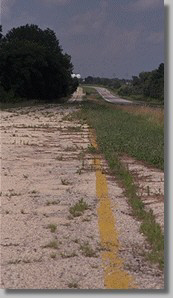
How It Is Today The US Congress is considering placing the remaining parts of Route 66 under State protection, "to grant the highway historic status" as it is called. Route 66 was able to portray the very character of this country in a most wonderful way. "This must not disappear!" sounds the basis for its preservation. Before too long, Route 66 could fall under the administration of the National Park Service. This would assure her the elevation to "Monument", "Drive-In-Museum" and "Statue of Liberty" through mobility. Today, Route 66 no longer
exists the way it did 50 years ago. There are still some segments left,
and a few people try to revive the business along historic Highway 66.
Especially tourists like to travel from Chicago to Los Angeles over this
curvy, winding highway. They get the feeling of freedom and the
"American Way Of Life", like it was once, so long ago. People
travel by car, by bike, known as "Easy Rider", or any other
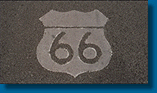
motorized vehicle. In order for people to identify Route 66 several
states have installed Historic Route 66 signs along portions of the
road. These signs do not typically appear on interstate highway exits,
do not usually give directions, and are often stolen for souvenirs (why
are some tourists so selfish Traveling along Route 66 nowadays, one can still meet many friendly people, who lived during Highway 66's happiest days. There are still some 300 "Route 66 towns" with an on-ramp to the highway. They are the few which did survive. Most offer small souvenir shops, small gas stations or family-owned restaurants. If one asks those people about the "good old days" one should be prepared to listen to long, emotion-filled stories about Route 66. Reliving those old days gives one often a better idea of the way it was, than one could ever gather from reading about it. Still best of all are the experiences a traveler gathers himself, they are sure to give tourists a better idea of how it must have been half a century ago. |







 and do not think of
others?). Finding Route 66 can be an adventure and a challenge requiring
a good sense of direction, several maps and guidebooks, a navigator, and
above all a lot of patience to decipher the highway's various
alignments.
and do not think of
others?). Finding Route 66 can be an adventure and a challenge requiring
a good sense of direction, several maps and guidebooks, a navigator, and
above all a lot of patience to decipher the highway's various
alignments.